
Missing the Notice Deadline as a Staten Island City Worker: What Comes Next
Key Takeaways: Missing the 90-day Notice of Claim deadline under New York General Municipal Law §50-e does not automatically end a Staten Island city worker’s case, but it creates serious risk because the omission generally bars suit unless a court grants relief. The path forward shifts to petitioning the Supreme Court (or County Court) for leave to serve a late notice, based on whether the City had actual knowledge of the essential facts within 90 days or a reasonable time after, the reasonableness of the excuse, and whether the delay prejudiced the City’s defense. The application generally must be made before the statute of limitations, usually one year and 90 days from accrual, expires. Internal documentation like Line of Duty Injury paperwork and Unusual Occurrence Reports can help show timely knowledge, though such records generally aren’t a substitute for a compliant notice. Workers’ compensation and agency benefit filings run on separate tracks and don’t satisfy §50-e, and tolling exceptions are narrow. Claims against third parties like contractors or private drivers generally fall outside the municipal notice requirement, which can sometimes preserve a case.
Missing the 90-day window to serve a Notice of Claim is serious, but not automatically the end of your case. Under General Municipal Law §50-e, a city worker injured on the job generally must serve a sworn Notice of Claim on the City within 90 days after the claim accrues before suing in tort. Once that deadline passes, the path forward usually shifts to petitioning a court for permission to serve a late notice, and that application generally must be made within the statute of limitations.
If you’re a Staten Island sanitation worker, uniformed employee, or other municipal worker worried your deadline has passed, get answers soon. The Law Offices of Dennis P. Ryan helps injured city workers assess their options. Call 212.441.4352 or contact us now to discuss your situation.
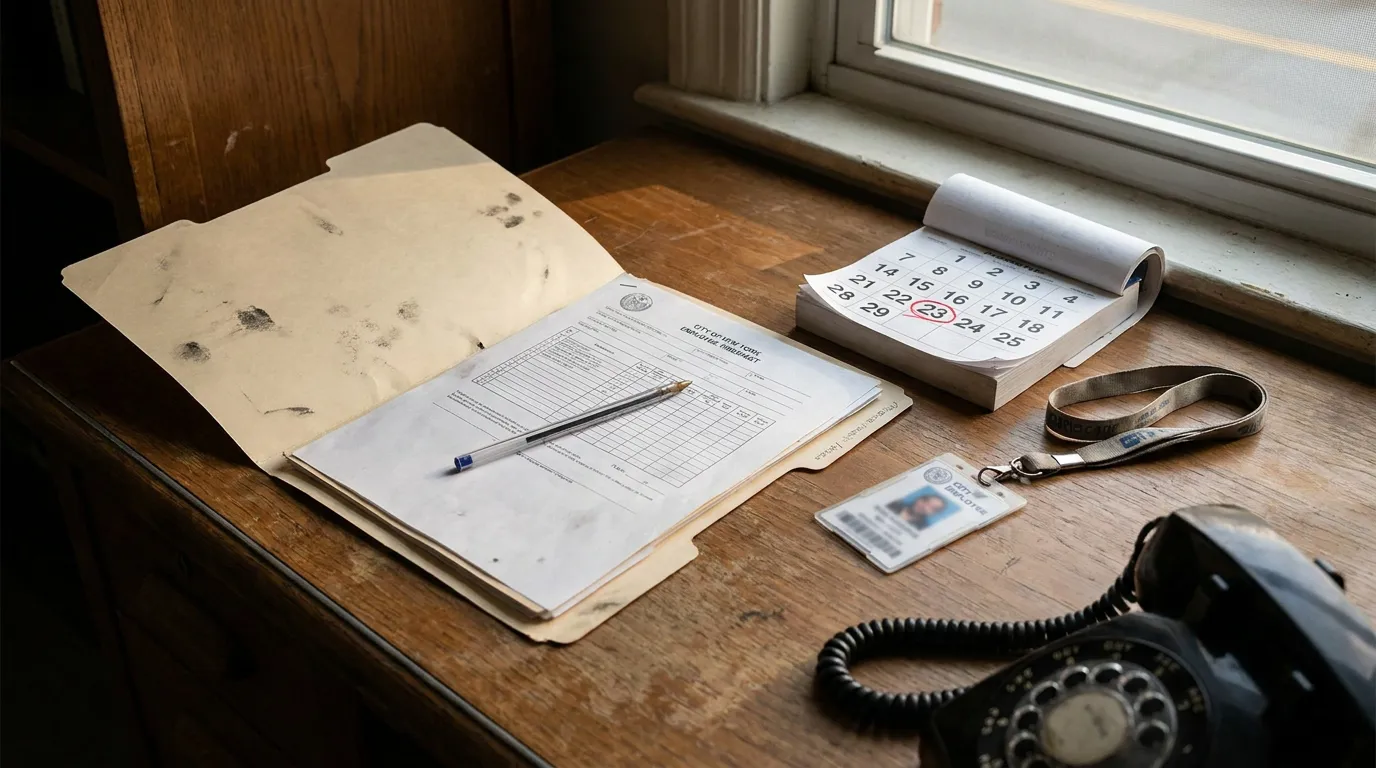
Why the 90-Day Deadline Exists Under General Municipal Law 50-e
New York treats the Notice of Claim as a mandatory condition precedent, not a formality. Before a tort suit can proceed against a municipal entity, state law generally requires a notice of claim served in compliance with General Municipal Law §50-e, with compliance pleaded. The purpose is to give the municipality an early chance to investigate while evidence and witnesses are still available.
The statute also addresses required contents. The notice generally must be a written, sworn statement identifying the claimant and address, the nature of the claim, the time, place, and manner it arose, and the damages claimed, so far as practicable. Vague notices can invite challenges even when timely, though courts may disregard defects where the municipality isn’t prejudiced.
For claims against the City of New York, the NYC Comptroller’s Office generally serves as the intake point, receiving Notices of Claim against the City, its agencies, or employees, including workers injured in Staten Island. Its claims dashboard functions as intake and tracking; filing there doesn’t itself resolve or decide the claim.
What Happens When the Deadline Passes Without a Notice
The consequence of a missed deadline can be severe. Failure to serve notice within the applicable period generally bars any tort claim against the municipality absent judicial leave. A City defense attorney may move to dismiss, and the court may grant that motion unless the claimant has obtained leave to serve a late notice.
That said, the bar isn’t necessarily permanent. A person who misses the deadline may ask a court for permission to serve a late notice, and the court has discretion to grant it. This is a separate legal step, generally a special proceeding or motion in a court of competent jurisdiction, not something the Comptroller’s office can approve.
The Outer Limit Courts Cannot Cross
Courts generally cannot grant leave after the statute of limitations expires, ordinarily one year and 90 days from accrual. That boundary, under General Municipal Law §50-i, is where many otherwise strong cases are lost, though tolls such as infancy or disability can affect it. If you’re approaching that mark, waiting to consult a lawyer about the timeline may eliminate options that would otherwise remain available.
💡 Pro Tip: Calculate dates from when the claim accrued, generally the incident date, not from when you first saw a doctor or learned the full extent of your injury.
Seeking Leave to File a Late Notice of Claim in NYC
A petition for leave to serve a late notice of claim asks the court to exercise discretion, weighing several fact-specific factors under §50-e(5). No single factor is typically dispositive, though actual knowledge of the essential facts is often especially significant. Judges commonly consider:
- Whether the claimant offered a reasonable excuse for the delay
- Whether the City acquired actual knowledge of the essential facts within 90 days or a reasonable time after
- Whether the delay substantially prejudiced the City’s ability to defend
- Whether documentary proof, such as incident reports, supports the petition
Actual knowledge often becomes a central battleground for city workers. Courts frequently examine whether the City already knew of the incident through police or incident reports, but have cautioned that mere notice of an accident isn’t the same as knowledge of the essential facts. For DSNY and other uniformed personnel, internal Line of Duty Injury paperwork and Unusual Occurrence Reports may help show supervisors documented those facts contemporaneously, particularly where they suggest potential municipal fault.
Why Internal Reports Matter So Much
Line of Duty Injury and Unusual Occurrence documentation may serve two purposes at once: supporting agency benefits claims, and serving as evidence of the City’s timely knowledge. Request copies of everything you signed or a supervisor prepared, and store them somewhere outside the workplace.
Deadlines and Processes That Are Easy to Confuse
Injured municipal employees frequently mix up three separate timelines, each carrying different consequences. Workers’ compensation, agency benefit filings, and civil litigation against the City generally operate independently; filing one doesn’t preserve rights under the others. Workers’ compensation is often the exclusive remedy against your employer, so a civil suit may depend on a claim against a different party or a statute permitting such an action.
| Track | General Purpose | Relationship to Notice of Claim |
|---|---|---|
| Notice of Claim | Prerequisite to a civil suit against the City | Generally due within 90 days under GML §50-e |
| Workers’ compensation | Medical and wage benefits | Separate administrative process; does not satisfy §50-e |
| LODI / agency benefits | Internal line-of-duty designations | Separate from litigation, though records may support a claim |
Because these tracks are distinct, filing an incident report at your garage or facility typically doesn’t serve as service of a notice of claim. Some workers assume the City "already knows" and let 90 days lapse; that assumption may help later in a late-notice petition, but generally isn’t a substitute for compliance.
Limited Circumstances Where the Clock May Start Later
New York recognizes a narrow discovery-rule provision cross-referencing the notice-of-claim requirements. Under CPLR 203(g)(2), in limited cases involving alleged failure to diagnose cancer or a malignant tumor, the time to serve notice may not begin until the person knows or reasonably should have known of both the negligent act and that it caused injury, subject to its own outer limits. This provision is narrow and applies mainly in medical malpractice contexts.
Courts generally interpret accrual and tolling exceptions narrowly, and no such doctrine applies automatically. Most workplace injury scenarios, equipment failure, vehicle collisions, slip-and-fall, typically won’t qualify. Where infancy is at issue, it is important to understand that while infancy tolling under CPLR 208 automatically tolls the statute of limitations for commencing suit under GML §50-i, it does not automatically toll the 90-day Notice of Claim filing deadline under GML §50-e itself, a court application for leave to file late is still required for that deadline. Legal disability (insanity) tolling under CPLR 208 is interpreted narrowly and requires proof of an overall inability to function in society, and does not apply automatically.
💡 Pro Tip: Even if you believe a tolling argument might apply, serving a notice as soon as possible is generally safer. Preserving the argument in the alternative is better than relying on it alone.
Practical Steps After a Missed Notice Deadline
Acting quickly may matter more after a missed deadline than before. The window narrows, and your supporting record’s quality often influences whether a court grants relief. Consider:
- Write down the incident date, location, and everyone present while memory is fresh
- Gather medical records connecting treatment to the workplace event
- Collect agency reports, photographs, or written communications about the incident
- Note any reason for the delay, including incapacitating injury or hospitalization
Documented explanations generally carry more weight than general statements. Courts may consider a claimant’s physical condition, but conclusory assertions rarely satisfy the reasonable-excuse factor, and an unexcused delay isn’t always fatal where other factors favor the claimant.
How a Late Notice of Claim NYC Attorney Evaluates Your Options
A careful evaluation generally starts with confirming when the claim accrued and which entity must be served. Some incidents involve the City, a separate public authority, a contractor, a property owner, or a vehicle owner; purely private third-party defendants generally aren’t subject to the §50-e requirement, though some public authorities have their own notice rules and shorter deadlines. Identifying a viable non-municipal defendant can sometimes preserve a case otherwise barred against the City.
From there, the analysis turns to whether a late-notice petition is realistic and how it might be supported. Working with a late notice of claim nyc lawyer can help you understand what evidence courts find persuasive and how quickly a petition may need to be filed. Every case is fact-dependent, and no attorney can guarantee a court will grant leave.
Frequently Asked Questions
1. Does missing the 90-day deadline permanently end my claim against the City?
Not necessarily. Missing the deadline generally bars a tort suit against the City unless a court grants leave to serve a late notice, and that relief is discretionary and time-limited.
2. How long do I have to ask a court for permission to file late?
Courts generally cannot grant leave after the statute of limitations expires, ordinarily one year and 90 days from accrual, subject to applicable tolls. Waiting until that point approaches may significantly reduce your options.
3. Does filing a workers’ compensation claim satisfy the notice requirement?
Generally no. Workers’ compensation is a separate administrative process and generally does not substitute for compliance with General Municipal Law §50-e.
4. Will my LODI report count as notice to the City?
It may support an argument that the City had actual knowledge of the essential facts, which courts may consider. It is generally not, however, a legally compliant notice of claim on its own.
5. Can I sue a third party without serving a Notice of Claim?
Claims against private parties, such as a negligent driver or contractor, generally aren’t subject to the municipal notice requirement, though other notice rules for public entities and applicable limitations periods still apply.
Protecting What Remains of Your Claim
A missed notice deadline creates real risk, but doesn’t always foreclose recovery. New York’s framework generally bars tort claims where no timely notice was served, while permitting courts, in their discretion, to grant leave for late filing based on actual knowledge, excuse, and prejudice. For Staten Island city workers, the strength of internal reports and medical documentation often shapes that analysis. Outcomes depend on the specific facts of each case.
If your 90-day window has closed or is closing, don’t assume the case is over. Reach out to The Law Offices of Dennis P. Ryan by calling 212.441.4352 or schedule a consultation to review your remaining options.
Disclaimer: This content is for informational purposes only and is not legal advice. Every case is unique, and results may vary. Consult an attorney about your specific circumstances.