

Rising Risks on NYC Job Sites and Your Rights After an Injury
Key Takeaways: Construction deaths in New York City rose in 2025, and falls, struck-by accidents and falling debris remain leading causes of serious injury and death on job sites. New York Labor Law §§ 240 and 241 place safety duties on property owners, contractors and their agents, not just on the worker’s direct employer. Workers’ compensation is usually the only remedy against your own employer, with exceptions such as an employer that failed to carry required coverage. Under Workers’ Compensation Law § 29, you can often collect compensation benefits and also file a third-party claim, though the carrier will generally have a lien on any recovery. Strict deadlines apply, including much shorter notice-of-claim deadlines for government-owned projects. If you are injured, get medical care, document the scene, report the injury in writing and talk to an experienced construction accident lawyer soon.
Construction work in New York City became more dangerous in 2025, and injured workers and their families need to understand their rights now. Falls, struck-by accidents and falling debris still cause devastating harm on job sites across the five boroughs, including Queens. If you suffered a falling debris construction injury, New York law may give you more than one path to compensation. You may be able to collect workers’ compensation benefits and also bring a separate claim against a negligent property owner or contractor. This article explains how those options work, which deadlines may apply and what steps can help protect your claim.
If you or someone you love was hurt on a construction site, The Law Offices of Dennis P. Ryan can review your situation and explain your options. Call 212.441.4352 or contact us now to schedule a consultation.
Why Construction Remains One of the Most Dangerous Industries
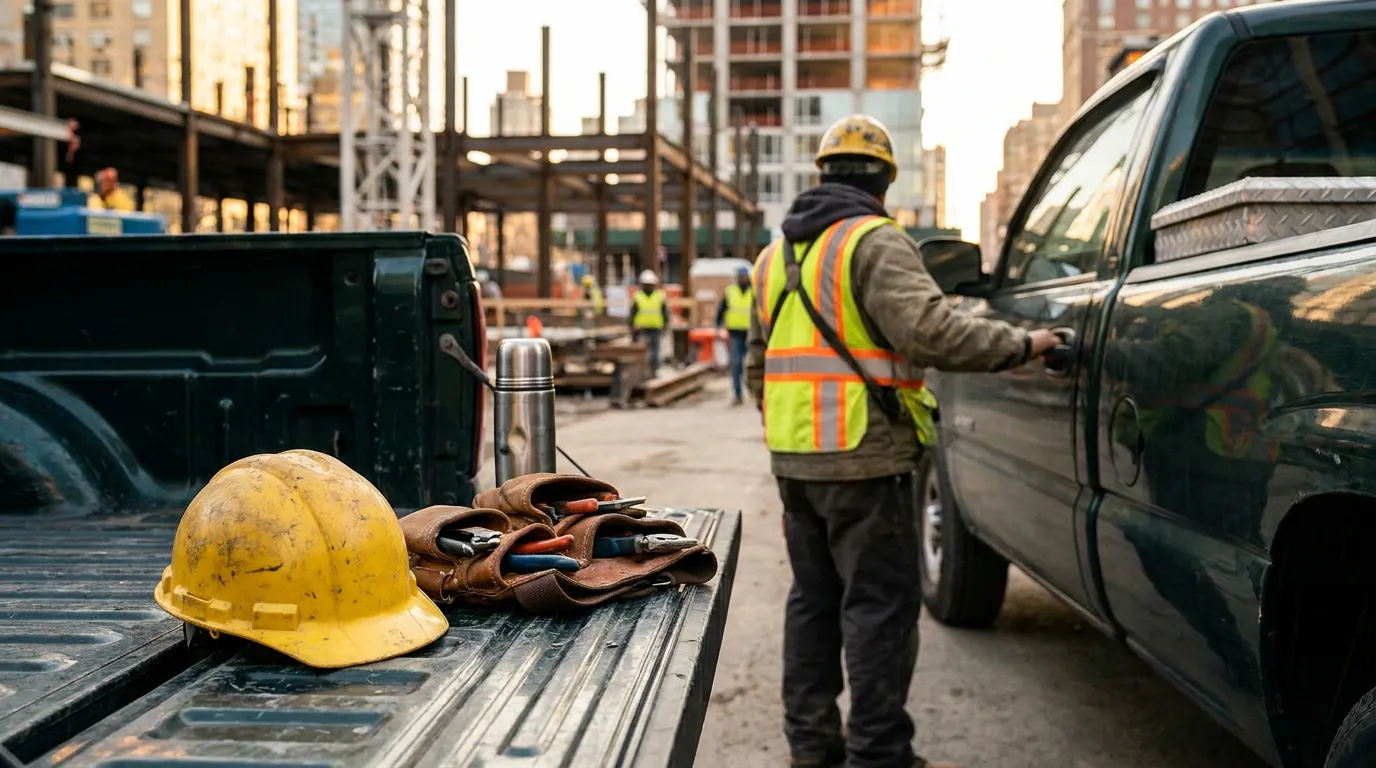
Construction has long ranked among the highest-risk industries in the country. The CDC’s National Institute for Occupational Safety and Health (NIOSH) focuses on the "Fatal Four," the hazards that cause most construction deaths: falls, struck-by incidents, electrocutions and caught-in/between hazards.
Struck-by accidents include being hit by falling tools, materials, debris or moving equipment. On busy urban sites, where work goes on many stories above sidewalks, other trades and the public, one unsecured object can cause catastrophic harm, including head trauma, spinal injuries, fractures and wrongful death.
What Can Drive Injury Trends Upward
Disruptions to routine safety practices can raise the risk of injury. Research on the U.S. construction industry after COVID-19 found that interruptions to safety training, inspections and crew communication can weaken a site’s safety system, often resulting in preventable injuries.
💡 Pro Tip: If you notice that toe boards, debris netting or overhead protection were missing before your accident, write down what you saw as soon as you can. Memories fade quickly, and job sites change fast once an investigation starts.
How New York Law Protects Workers After a Falling Debris Construction Injury
New York gives construction workers protections that go beyond general negligence law. Under N.Y. Labor Law § 241(6), every area where construction, excavation or demolition work takes place must be built, equipped, guarded and operated so it provides reasonable and adequate protection to the people employed there or lawfully frequenting the area.
Who Is Responsible Under Labor Law § 241
The duty under Labor Law § 241 generally falls on owners, contractors and their agents, not only on the worker’s direct employer. Section 241(6) also requires compliance with safety rules issued by the Commissioner of Labor, found mainly in the Industrial Code (12 NYCRR Part 23). A worker generally must show a violation of a specific Industrial Code provision that caused the injury. Owners of one- and two-family homes who hire contractors but do not direct or control the work are generally exempt.
Labor Law §§ 240 and 241 together form a key legal basis for many injured workers’ claims. Section 240(1) generally deals with gravity-related hazards, such as falls from heights and objects that fall because they were not properly hoisted or secured. It imposes absolute liability for a violation that proximately causes the injury, so the worker’s comparative negligence is not a defense. Section 241(6) imposes a nondelegable duty, but comparative negligence may reduce recovery. Not every falling-object accident qualifies under § 240(1), and success often depends on the specific facts and safety rule involved.
Workers’ Compensation and Its Limits
Workers’ compensation is usually the first source of benefits for an injured construction worker, but it is often not the only one. Under Workers’ Compensation Law § 11, an employer’s liability for compensation generally replaces all other liability to the injured worker, so you generally cannot sue your own employer for negligence. Under § 29(6), you also generally cannot sue a coworker employed by the same employer.
There is a significant exception when an employer did not carry the required workers’ compensation coverage. In that situation, the injured worker, or their legal representative if the worker died, may claim compensation or sue the employer in court for damages. The employer generally cannot rely on defenses such as contributory negligence, assumption of risk or a coworker’s negligence.
When Employers Can Be Brought Into a Case
A third party sued by an injured worker generally cannot seek contribution or indemnity from the worker’s employer unless the worker suffered a "grave injury" or the employer agreed in writing before the accident to provide indemnity or contribution. Under Workers’ Compensation Law § 11, grave injuries include:
- Death
- Permanent and total loss of use or amputation of an arm, leg, hand or foot
- Paraplegia or quadriplegia
- Total and permanent blindness or deafness
- An acquired brain injury that results in permanent total disability
The full statutory list also includes certain losses of fingers or toes, loss of nose or ear and permanent and severe facial disfigurement. This rule mainly shapes how defendants divide responsibility among themselves. It generally does not reduce the injured worker’s own right to pursue a claim.
Pursuing a Third-Party Claim Alongside Compensation
If someone other than your employer caused your injury, you may be able to pursue both workers’ compensation and a personal injury lawsuit. Under Workers’ Compensation Law § 29, a worker hurt or killed through the negligence of someone who is not their employer, and who does not work for the same employer, generally does not have to choose between benefits and a lawsuit. On construction sites, that third party is often a property owner, general contractor or another subcontractor.
A third-party claim may allow recovery for losses that workers’ compensation does not cover, such as pain and suffering. Workers’ compensation generally provides medical care and partial wage replacement, while a Labor Law or negligence claim may seek broader damages. Settling a third-party case generally requires the carrier’s written consent or court approval, or you risk losing future compensation benefits.
How the Compensation Lien Works
The workers’ compensation carrier generally has a lien on any third-party recovery, whether it comes from a judgment or a settlement. The lien generally covers the compensation and medical benefits the carrier paid. It is applied to the net recovery after reasonable litigation costs, including attorney’s fees, are deducted. Any excess recovery may be credited against future benefits.
| Remedy | Who Pays | What It May Cover |
|---|---|---|
| Workers’ compensation | Employer’s insurance carrier | Medical care and partial lost wages |
| Third-party Labor Law or negligence claim | Owners, contractors or other non-employers | Broader damages, including pain and suffering |
| Direct suit against employer | Generally only an uninsured employer | Damages, with certain defenses barred |
Deadlines That Can Affect Your Claim
Timing rules can determine whether a valid claim moves forward or is lost. Under Workers’ Compensation Law § 29(1), (2), a worker who takes or plans to take compensation may sue a third party, and must notify the Workers’ Compensation Board chair, the employer and the insurance carrier within 30 days after starting the suit. If the worker has not started suit within the statutory period, the carrier may be able to take over the claim through an assignment.
The main deadline for most third-party suits is the general civil statute of limitations: generally three years for personal injury and two years from death for wrongful death, which you should confirm with an attorney. If a government entity owns the property or project, a notice of claim is often required within 90 days, and suit generally must follow within one year and 90 days. Learn more about filing a notice of claim in Queens. Courts have discretion over late-notice requests but do not grant them automatically.
Practical Steps After a Queens Construction Injury
The actions you take soon after a Queens construction injury can help protect both your health and your claim. Insurers and defense counsel may dispute how the accident happened or how serious your injuries are, so documentation matters. Report the injury to your employer in writing within 30 days, and file a workers’ compensation claim with the Board within two years. Consider these steps:
- Get medical care right away and follow your treatment plan
- Report the injury to your employer in writing
- Photograph the scene, the debris and any missing safety equipment
- Collect names of witnesses and the companies working on site
- Keep records of lost wages and medical expenses
💡 Pro Tip: Be cautious about giving recorded statements to an insurer for a contractor or owner before you understand your rights. Those statements may later be used to dispute responsibility.
Speaking with an experienced NYC construction accident lawyer can help you identify every potentially responsible party. On large projects, several companies may share control of the site, and determining who violated which safety rule often takes investigation.
Frequently Asked Questions
1. Can I sue my employer after a falling debris construction injury?
Generally, no. Under Workers’ Compensation Law § 11, workers’ compensation is usually your exclusive remedy against your employer. Narrow exceptions may apply, such as when your employer failed to carry the required coverage or intentionally caused the injury.
2. Who else might be responsible for my injury?
Property owners, general contractors and their agents may be liable under Labor Law §§ 240 and 241, depending on the facts. Other subcontractors may be liable under general negligence principles or, if they had authority over the work, under the Labor Law.
3. Can I receive workers’ compensation and still file a lawsuit?
In many cases, yes. Workers’ Compensation Law § 29 generally allows you to collect benefits and also pursue a third-party claim, subject to the carrier’s lien and its consent to any settlement.
4. What if a family member died in a construction accident?
Dependents may be able to receive workers’ compensation death benefits. A court-appointed personal representative of the estate may be able to bring a wrongful death claim against responsible third parties, generally within two years of the death.
5. How long do I have to act?
Personal injury suits generally must be filed within three years, and wrongful death suits within two years. Claims against government entities often require a notice of claim within 90 days. Acting promptly can help preserve your options.
Protecting Your Future After a Job Site Injury
The reported rise in construction deaths in 2025 shows how much is at stake when sites are not properly guarded or managed. New York law gives injured workers important protections through Labor Law §§ 240 and 241, workers’ compensation and third-party claims. Each path comes with its own rules, exceptions and deadlines, and understanding them early may make a meaningful difference.
If you suffered a falling debris construction injury or lost a loved one on a job site, The Law Offices of Dennis P. Ryan can help you understand your legal options. Call 212.441.4352 or reach out today to discuss your case.
Disclaimer: This content is for informational purposes only and is not legal advice. Every case is unique, and results may vary. Consult an attorney about your specific circumstances.