
Understanding Your Rights After a Queens Construction Injury
Key Takeaways: To file a Notice of Claim after a Queens construction site injury, city workers must serve written notice on the NYC Comptroller within 90 days under GML Section 50-e, including your name, post-office address, the nature of the claim, the time when, the place where, and the manner in which the claim arose, and the items of damage or injuries claimed. This notice is mandatory before filing any lawsuit, which must commence within one year and 90 days under GML Section 50-i, with a 30-day waiting period after service. New York Labor Law Sections 240 and 241 provide strong construction worker protections, Section 240 imposes absolute liability for elevation risks, while Section 241 allows comparative negligence defenses. Workers’ compensation benefits may be available regardless of fault and don’t eliminate third-party civil lawsuit rights. Missing deadlines can permanently bar your claim.
Filing a Notice of Claim after a Queens construction site injury begins with one urgent step: serving written notice on the City within 90 days of your injury date. If you’re a NYC municipal employee injured on a city-owned or city-contracted project, this document is the legal key that opens the courthouse door. Under New York General Municipal Law (GML) Section 50-e, anyone intending to sue a municipal entity for personal injury must first serve a Notice of Claim within 90 days. Miss that window, and you may lose the right to hold the City accountable.
If you were hurt on the job, the team at The Law Offices of Dennis P. Ryan is ready to help. Call us at 212.441.4352 or reach out through our contact page to discuss your options before your deadline passes.
💡 Pro Tip: Write down the exact date, time, and location of your injury the same day it happens. That single detail anchors every deadline that follows.
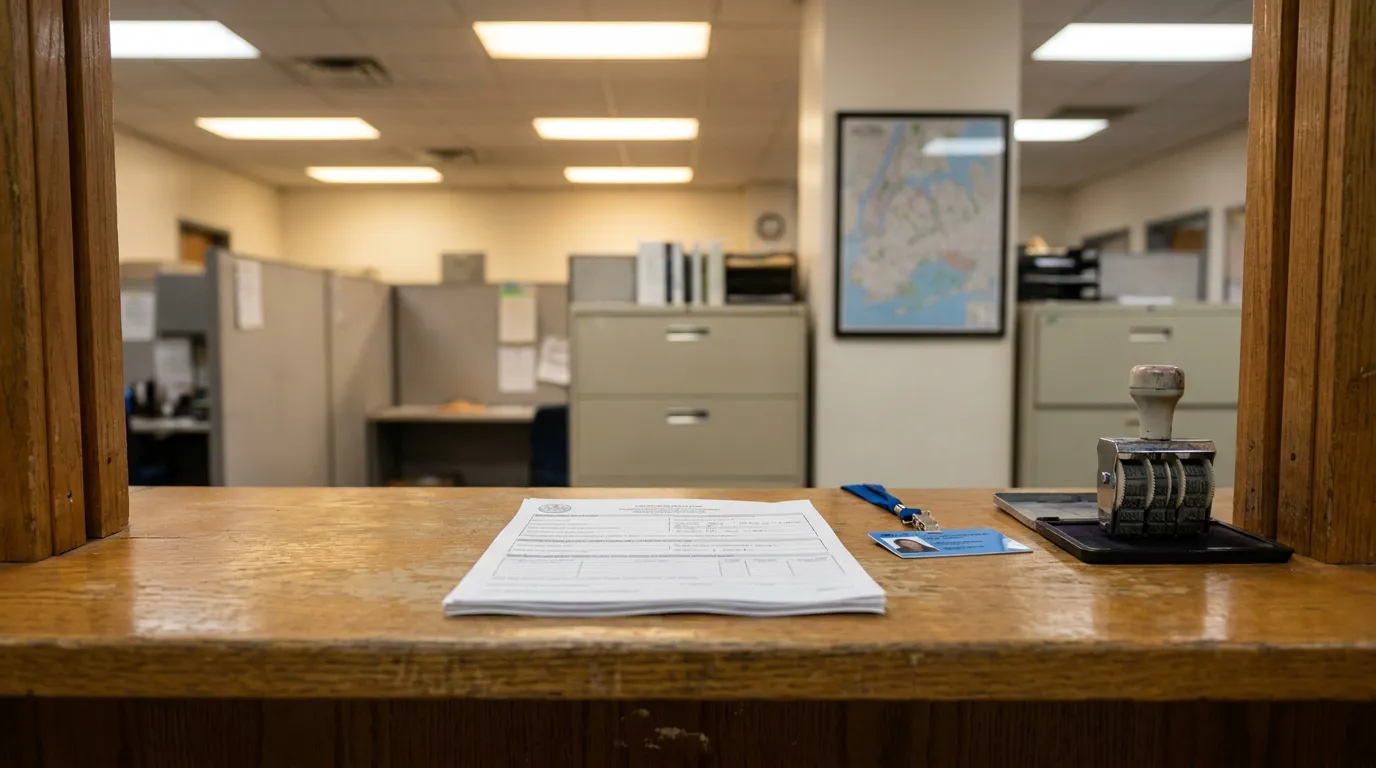
What a Notice of Claim Really Is
A Notice of Claim is formal written warning to the government that you intend to pursue a legal claim. It’s not the lawsuit itself but a statutory condition that must be satisfied before any lawsuit can be filed. GML Section 50-i makes clear that no personal injury action against the City can proceed unless a Notice of Claim has been properly served under GML Section 50-e.
This requirement is a threshold, not a formality. For an in-depth explanation, our overview of the Notice of Claim Queens process for city workers covers the fundamentals. The notice gives the municipality opportunity to investigate while evidence is fresh. Courts may permit late notice under GML Section 50-e(5), but such relief is discretionary and narrowly interpreted.
The Deadlines That Can Make or Break Your Construction Site Injury Claim
Timing controls almost everything in a construction site injury claim against the City. Two separate deadlines apply, and both must be independently satisfied.
The 90-Day Notice of Claim Window
The first clock starts on the day you are injured. For a Queens construction site worker hurt on a city project, failing to serve notice within 90 days will generally bar any lawsuit. The 90-day rule under GML Section 50-e is the foundation of the entire process. You can review the 90-day Notice of Claim rule through the New York State Senate.
The One Year and 90 Day Lawsuit Deadline
Serving the notice on time doesn’t mean you can wait to sue. After filing a Notice of Claim, an injured Queens worker must commence the actual lawsuit within 1 year and 90 days from the injury date. This GML 50-i deadline is stricter than the standard 3-year personal injury statute and missing it permanently bars the claim. The one year and 90 day deadline requirements are in GML Section 50-i.
A mandatory waiting period is built into the process. No lawsuit can be brought until at least 30 days after Notice of Claim service, giving the municipality time to investigate and potentially settle. GML Section 50-i requires that lawsuit papers show a Notice of Claim was timely served and 30 days elapsed before commencing action.
💡 Pro Tip: Treat the 90-day notice deadline and the one-year-and-90-day filing deadline as two separate calendar entries. Satisfying one does not protect the other.
What Your Notice of Claim Must Contain
A defective notice can be as damaging as no notice at all. The Notice of Claim must be served on the NYC Comptroller and include the claimant’s name and post-office address, the nature of the claim, the time when, the place where, and the manner in which the claim arose, and the items of damage or injuries claimed. These requirements come from GML Section 50-e(2).
Accuracy matters enormously. Errors may be corrected under GML Section 50-e(6) if made in good faith and the City isn’t prejudiced, but strict compliance is strongly advised. Key items include:
- Your full name and mailing address
- The claim nature and how the accident occurred
- The exact time, place, and manner in which the injury occurred
- The injuries and damages you’re claiming
💡 Pro Tip: Photograph the accident scene, equipment involved, and your injuries as soon as possible. This documentation supports the "manner in which the claim arose" element.
Labor Law Protections for Injured Construction Workers
New York gives construction workers some of the country’s strongest safety protections. These laws are in New York Labor Law Article 10, governing worker safety and liability at construction sites. They may apply alongside your municipal claim when a contractor or property owner contributed to injuries.
Section 240 and the Scaffold Law
Labor Law Section 240, the Scaffold Law, addresses elevation-related risks. It imposes absolute liability on contractors and property owners to protect workers in height-related construction work, meaning comparative negligence cannot be used as a defense. Section 240 requires owners and contractors (except owners of one and two family dwellings not directing work) to furnish proper safety devices like scaffolding, ladders, and ropes. However, liability isn’t automatic in every fall, the statutory violation must proximately cause injury, and workers whose own conduct is the sole proximate cause may not recover.
Section 241 and General Safety Duties
Labor Law Section 241 extends protection beyond falls. Section 241(6) provides additional protections for construction, excavation, and demolition work, imposing nondelegable duty for reasonable protection, but unlike Section 240 it’s not strict liability and allows comparative negligence evidence. To recover under Section 241(6), workers must show violation of a concrete, specific Industrial Code safety standard. This distinction matters because recovery under Section 241 could be reduced by your own fault, while Section 240 generally doesn’t allow that defense.
Case law continues shaping these statutes’ reach. The Court of Appeals’ 1998 Joblon v. Solow decision clarified Section 240 protection can apply to qualifying work away from traditional construction sites, defining altering as requiring significant physical change to a building’s configuration or composition.
Workers’ Compensation and a Civil Lawsuit Are Not the Same Thing
Filing for workers’ compensation doesn’t erase your right to sue a negligent third party. Under NY Workers Compensation Law Section 50, cities and political subdivisions must secure workers compensation coverage for employees. For city workers injured at Queens construction sites, you may be entitled to benefits regardless of fault. While workers’ compensation is generally the exclusive remedy against your employer, it doesn’t eliminate the right to file a Notice of Claim and pursue a separate civil lawsuit against third-party contractors or property owners.
These are parallel but distinct tracks. Because coordinating both can be complex, guidance from a construction site injury claim lawyer can help you avoid steps that reduce total recovery.
💡 Pro Tip: Preserve any Line of Duty Injury or Unusual Occurrence reports your agency generates. These internal records often become powerful evidence in both claims.
Frequently Asked Questions
-
What happens if I miss the 90-day Notice of Claim deadline?
Missing the deadline generally bars your lawsuit. Under GML Section 50-i, actions cannot proceed without timely Notice of Claim service. Courts may allow late notice under GML Section 50-e(5), but relief is discretionary and never guaranteed.
-
Who do I serve the Notice of Claim on for a New York City claim?
For NYC claims, serve the notice on the Comptroller of the City of New York. It must contain the specific information required under GML Section 50-e(2).
-
Can I sue both the City and a construction contractor?
In many cases, yes. You may pursue workers’ compensation while bringing civil claims against third-party contractors or property owners. Whether both apply depends on who controlled the worksite and caused injury.
-
Is the deadline to sue the City really shorter than a normal injury case?
Yes. While many personal injury claims carry three-year limits, municipal claims must be filed within one year and 90 days under GML Section 50-i. Courts interpret this strictly.
-
Does comparative negligence affect my construction claim?
It depends on the statute. Under Labor Law Section 240, comparative negligence generally isn’t a defense, while under Section 241 evidence of your fault may be admissible and reduce recovery.
Protecting Your Rights Before the Clock Runs Out
A Queens construction site injury against the City involves overlapping deadlines, strict content rules, and powerful Labor Law protections that reward prompt action. From serving timely Notice of Claim to filing suit within one year and 90 days, each step carries consequences that can define your recovery. Understanding these rules early gives you the best opportunity to protect your health, wages, and future.
You don’t have to navigate the municipal claims process alone. The The Law Offices of Dennis P. Ryan team is prepared to guide injured city workers through every deadline and requirement. Call 212.441.4352 today or request a consultation online so you can act before your time expires.