
Falling From a Boom Lift Basket: Your Rights Under New York Law
Key Takeaways: In many cases, yes, you can sue if you fall from a boom lift basket in New York, but you usually sue a property owner, general contractor, or other third party, not your employer. Workers’ Compensation Law § 11 generally makes workers’ compensation your only remedy against your employer, with limited exceptions, such as when an employer fails to carry coverage. Labor Law 240(1) generally makes owners and contractors strictly liable when their failure to provide proper fall protection is a proximate cause of a fall, and a worker’s own comparative negligence generally does not reduce recovery under that statute. Labor Law 241(6) and specific Industrial Code rules may support another claim, although owners of one- and two-family homes who do not direct or control the work are usually exempt. Under Workers’ Compensation Law § 29(1), you can usually collect workers’ compensation benefits while you pursue a third-party lawsuit. Get medical care, save evidence, and act quickly. Personal injury claims generally must be filed within three years, and claims against public entities may require a notice of claim within 90 days and a lawsuit within one year and 90 days.
In many cases, yes, you can sue if you fall from a boom lift basket in New York, but you usually cannot sue your employer. New York’s workers’ compensation system generally bars injured workers from suing their own employers. However, state law gives construction workers strong rights against property owners, general contractors, and their agents. You may be able to collect workers’ compensation benefits and also file a separate lawsuit against a third party.
If you or a loved one was hurt in a boom lift basket fall in Kew Gardens or elsewhere in Queens, you do not have to sort out these laws alone. The Law Offices of Dennis P. Ryan helps injured construction workers understand their options and pursue every available remedy. Call 212-441-4352 or contact us now to talk about what happened.
Why Boom Lift Accidents Cause Such Serious Injuries
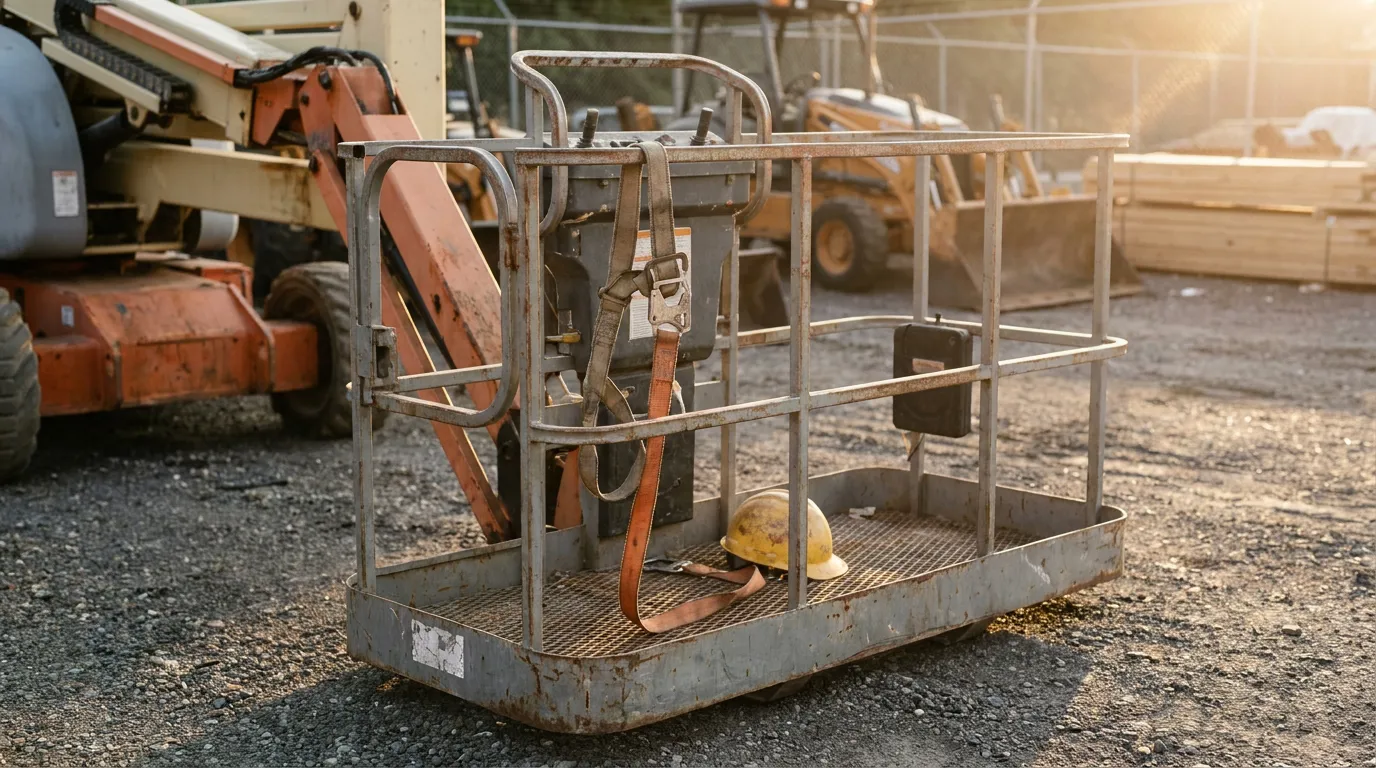
Boom lifts raise workers high above the ground, so any failure in the basket, guardrails, or operation can lead to a serious fall. The result is often a spinal cord injury, traumatic brain injury, or multiple broken bones.
Most aerial lift falls happen for a few preventable reasons. Common causes include:
- Missing, damaged, or loose guardrails on the basket
- Unstable or unsecured basket flooring
- Lift tip-overs caused by uneven ground or overreaching the boom
- Objects or vehicles striking the basket
- Mechanical or hydraulic failures in poorly maintained equipment
- Lack of proper fall protection, such as harnesses and lanyards tied to an anchor point
New York rules set specific standards for aerial baskets. The term "aerial basket" is defined under 12 NYCRR § 23-1.4(b)(2) of the Industrial Code, and other provisions set requirements for guarding and safety equipment on this type of equipment. When a basket lacks these protections, that failure may become key evidence in your claim.
How Labor Law 240(1) Protects Workers Who Fall From Heights
Labor Law 240(1), often called New York’s Scaffold Law, is usually the strongest tool for a worker who falls from a boom lift basket. The statute requires contractors, owners, and their agents to furnish or erect proper safety devices when a building or structure is being erected, demolished, repaired, altered, painted, cleaned, or pointed. You can read the full text of New York Labor Law § 240, but you should also check the official version on the New York State Senate website.
Courts commonly review boom lift falls under Section 240(1). New York courts have applied the statute to aerial lifts and boom lift baskets. Whether it covers your accident still depends on the type of work you were doing and how the fall happened. For example, it generally does not cover routine maintenance.
Strict Liability for Owners and Contractors
Courts often describe Section 240(1) as imposing strict or absolute liability on owners and contractors who fail to provide proper protection. That means owners and general contractors may be responsible even if they did not supervise the work. In general, a worker’s own comparative negligence does not reduce recovery under this statute when a violation was a proximate cause of the fall. There are limits, though. A worker must show both a violation and that it caused the injury. Defendants sometimes argue that the worker’s own conduct was the "sole proximate cause" of the accident. To learn more, see our guide to New York’s scaffold law and how it protects Queens workers.
The Safety Railing Requirement in Labor Law 240(2)
Labor Law 240(2) adds a separate rule about safety rails on raised work platforms. It requires scaffolding or staging more than 20 feet above the ground or floor to have a safety rail, generally about 34 inches high, along its full length. There are exceptions, such as scaffolding fully inside a building that covers the entire floor of a room.
The One- and Two-Family Homeowner Exception
Labor Law 240(1) exempts owners of one- and two-family homes who hire out the work but do not direct or control it. This matters for workers hurt on home jobs in Queens neighborhoods like Kew Gardens. If the homeowner only hired someone to do the work, you usually must bring the claim against the contractors instead.
Other Claims Under Labor Law 241(6) and Industrial Code Rules
Labor Law 241(6) can give you a second claim when a boom lift or work area was not properly equipped, guarded, or operated. Under Labor Law § 241, every area where construction, excavation, or demolition work takes place must be built, equipped, guarded, arranged, operated, and run to reasonably and adequately protect the people working there. The same one- and two-family homeowner exemption generally applies.
A Section 241(6) claim generally must rest on a violation of a specific Industrial Code rule, and the violation must have caused the injury. Unlike under Section 240(1), a defendant may argue that the worker was partly at fault to reduce recovery on a 241(6) claim.
Local building safety rules may also matter in New York City cases. Breaking a specific NYC Administrative Code or Building Code section may serve as evidence of negligence, but how much weight a court gives it depends on the rule and the facts.
How Workers’ Compensation and Third-Party Lawsuits Fit Together
You can generally collect workers’ compensation benefits and also sue a responsible third party. Under Workers’ Compensation Law § 29(1), a worker hurt by the negligence of someone outside the same employer generally does not have to choose between compensation and a lawsuit. Settling a third-party case generally requires the insurance carrier’s consent or court approval.
Why You Usually Cannot Sue Your Own Employer
In most cases, Workers’ Compensation Law § 11 makes workers’ compensation the only thing your employer owes you. The main exception applies when the employer failed to carry workers’ compensation coverage. In that case, the injured worker may claim compensation or sue in court, and the employer generally cannot defend by blaming the worker’s negligence, assumption of risk, or a co-worker’s negligence. Narrow exceptions also exist for intentional assaults by the employer.
Section 11 also limits when a third-party defendant can bring your employer into the case. A sued owner or contractor generally cannot seek contribution or indemnity from your employer unless you suffered a "grave injury" or the employer signed a written contract before the accident agreeing to contribution or indemnity. Grave injuries include death; permanent and total loss of use or amputation of an arm, leg, hand, or foot; paraplegia or quadriplegia; total and permanent blindness or deafness; and a brain injury causing permanent total disability, among others. These rules affect how defendants handle your case, but they generally do not limit your right to bring the claim.
| Type of Claim | Who Is Usually Responsible | What It May Cover |
|---|---|---|
| Workers’ compensation | Your employer’s insurer | Medical care and partial wage replacement, regardless of fault |
| Labor Law 240(1) | Owners, general contractors, and their agents | Full damages, including pain and suffering, for height-related injuries |
| Labor Law 241(6) | Owners, general contractors, and their agents | Damages tied to specific Industrial Code violations, which may be reduced if you were partly at fault |
| Negligence claims | Equipment owners, subcontractors, or other third parties | Damages caused by unsafe equipment or careless conduct |
💡 Pro Tip: Report the injury to your employer in writing as soon as possible and keep a copy. Late reporting can cause needless disputes in your workers’ compensation claim.
Steps to Protect Your Boom Lift Fall Claim
What you do after an aerial lift fall can affect both your health and your legal claim. Get medical care right away and follow your doctor’s instructions. Then, if you can, take photos of the lift, the basket, the guardrails, and the ground, and write down the names of witnesses. Companies often repair or remove equipment quickly, so early evidence can matter a great deal.
Deadlines also apply, and they differ by type of claim. You generally must file a personal injury lawsuit in New York within three years of the injury. Claims against a city or other public entity generally require a notice of claim within 90 days and a lawsuit within one year and 90 days. For workers’ compensation, you must give your employer written notice within 30 days and file a claim within two years.
💡 Pro Tip: Be careful about giving recorded statements to an owner’s or contractor’s insurer before you understand your rights. They may use your words to argue that you caused your own fall.
Frequently Asked Questions
1. Can I sue my employer if I fell from a boom lift?
In most cases, no. Workers’ Compensation Law § 11 generally makes compensation your only remedy against your employer, unless the employer failed to carry coverage or another narrow exception applies. You may still be able to sue the property owner, general contractor, or another third party.
2. Does Labor Law 240(1) apply to boom lifts?
Generally, yes. New York courts have applied Section 240(1) to aerial lifts and boom lift baskets. Whether it applies to your case depends on the work you were doing and how the fall happened.
3. What if I made a mistake that contributed to my fall?
Under Section 240(1), your own comparative negligence generally does not reduce recovery when a violation was a proximate cause of the accident. Defendants may still argue that your actions were the sole proximate cause.
4. I was hurt working on a house in Kew Gardens. Can I sue the homeowner?
Owners of one- and two-family homes who do not direct or control the work are usually exempt under Labor Law 240(1) and 241(6). In that case, the claim usually goes forward against the contractors involved.
5. Can I receive workers’ compensation while my lawsuit is pending?
Yes, in many cases. Workers’ Compensation Law § 29(1) generally lets you receive compensation and medical benefits while you pursue a third-party lawsuit, although the compensation carrier usually has a lien on part of any recovery.
Holding the Right Parties Responsible After a Fall From Height
New York law gives injured workers real protections after boom lift accidents, but those protections depend on finding the right defendants and the right statutes. Workers’ compensation can pay for medical care and part of your lost wages, while a third-party claim may pay for pain and suffering and all of your lost earnings.
Talking with a boom lift accidents lawyer can help you understand which claims may apply to your fall. The team at The Law Offices of Dennis P. Ryan works with injured construction workers and their families in Kew Gardens and throughout New York. Call 212-441-4352 or schedule your consultation today to discuss your situation. You can also learn more about how we handle claims as a boom lift accidents lawyer for injured workers.
Disclaimer: This content is for informational purposes only and is not legal advice. Every case is unique, and results may vary. Consult an attorney about your specific circumstances.