
Injured by a Brooklyn Pothole on the Job? Here Is What City Workers Need to Know
Key Takeaways: Brooklyn city workers injured by a pothole on duty can pursue compensation through five time-sensitive steps. Report the injury immediately in writing to preserve workplace protections. Gather evidence, photos, witness information, and 311 complaint records before repairs occur. Serve a Notice of Claim on the Comptroller’s Office within 90 days. Weigh workers’ compensation against a civil claim. Calendar every deadline, lawsuits against the City must be filed within one year and 90 days. Municipal immunity and prior written notice rules make prompt action essential.
If you were hurt by a pothole while performing your duties in Brooklyn, you may be able to recover compensation, but the path forward depends on strict procedural rules. Can you sue the city for potholes that caused an on-duty injury? Sometimes, but only if you follow time-sensitive steps that protect both any potential civil claim and your workplace benefits. New York treats claims against the City very differently from private property owners, and missing a single deadline can permanently end your case.
If you are a DSNY sanitation worker, uniformed employee, or another city worker dealing with a Brooklyn on-duty injury, the team at The Law Offices of Dennis P. Ryan is ready to help. Call us at 212.441.4352 or reach out through our contact page to discuss next steps.
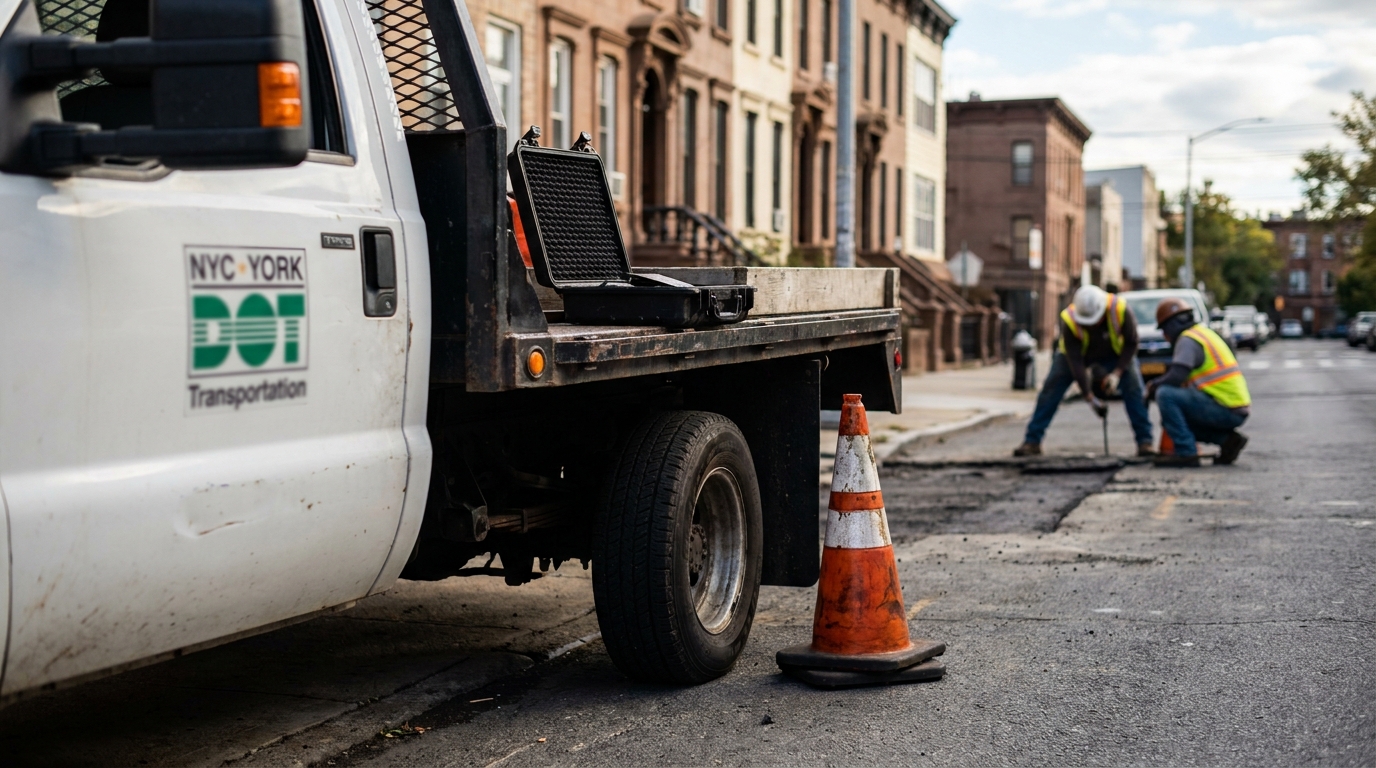
Can You Sue the City for Potholes That Hurt You at Work?
Suing a municipality for a pothole injury is possible, but governments enjoy protections that private defendants do not. Although New York has waived sovereign immunity for torts, municipalities still benefit from special protections, including notice-of-claim requirements and immunity for certain governmental functions. Since New York City maintains Brooklyn roadways, your claim must clear procedural hurdles that don’t exist in ordinary cases.
The most important distinction involves deadlines and pre-suit requirements. While the statute of limitations for negligence against a private party is generally three years, claims against the City run on a far shorter clock.
💡 Pro Tip: Treat the date of your injury as day one of a countdown. Write it down, photograph your calendar, and share it with anyone helping you, because the 90-day notice window moves faster than most people expect.
The 5 Steps to Take After a Pothole Injury on Duty in Brooklyn
Following a clear sequence of steps gives your city worker pothole accident claim its best chance of success. Below is a practical roadmap built around the procedural realities Brooklyn city workers face.
Step 1: Report the Injury and Protect Your Workplace Rights
Report your injury through proper workplace channels immediately and in writing. Workers’ Compensation Law § 120 makes it unlawful for employers to retaliate against employees for filing workers’ compensation benefits. Filing a prompt internal report, such as a Line of Duty Injury or Unusual Occurrence report, preserves these protections and creates an official record.
💡 Pro Tip: Request a copy of every report you file or sign. If a supervisor discourages you from reporting, document the conversation, including the date, time, and who was present.
Step 2: Gather Pothole Accident Evidence While It Still Exists
Strong NYC pothole injury documentation often makes or breaks a road defect claim. Potholes get patched, weather changes, and witnesses move on, so collect evidence early. Useful proof includes:
- Photographs and video from multiple angles with a measuring object for scale
- The exact location, date, and time of the incident
- Names and contact information for witnesses or coworkers
- Medical records documenting immediate hospitalization or treatment
- Records of prior 311 complaints about the same road defect
This evidence shows that a dangerous condition existed and that the City had reason to know about it, both central to proving liability.
Step 3: File a Notice of Claim With the Comptroller
Before you can sue New York City, you must serve a Notice of Claim on the Comptroller’s Office. Under New York General Municipal Law § 50-e, a personal injury notice of claim must be served within 90 days from the date of occurrence, and NYC Administrative Code § 7-201 addresses notice requirements before an action for a street defect begins. You can file a claim with the Comptroller’s Office electronically through the eClaim system, by personal delivery, or by certified mail.
Filing the Notice of Claim begins an investigation, not a lawsuit. The Comptroller may investigate and offer an early settlement. You may also be required to appear at a 50-h hearing, an interview under oath, to testify about your claim.
💡 Pro Tip: Keep proof of service. A certified mail receipt or eClaim confirmation number can become vital evidence if the City later disputes whether you filed on time.
Step 4: Weigh Workers’ Compensation Against a Civil Claim
A Brooklyn workplace pothole injury can trigger more than one avenue of recovery. City workers injured on duty may be entitled to file a workers’ compensation claim for an injury arising out of and in the course of employment. Workers’ compensation provides medical coverage and partial wage replacement without requiring proof of fault. However, workers’ compensation is generally the exclusive remedy against your own employer, so a city worker’s ability to bring a separate negligence lawsuit against the City for an on-duty injury may be limited.
Choosing the right combination of remedies is fact-dependent. Workers’ compensation provides benefits without proving fault, while a civil claim against a non-employer party may allow recovery for pain and suffering. You can learn more about how our firm handles a city worker pothole accident across New York City.
Step 5: Calendar Every Deadline and Act Promptly
Deadlines for suing a municipality are short and unforgiving. After serving your Notice of Claim, a lawsuit against the City generally must be filed within one year and 90 days of the incident date.
| Claim Type | General Time Limit |
|---|---|
| Notice of Claim to the City | 90 days from the date of occurrence |
| Lawsuit against the City | 1 year and 90 days from the incident |
| Negligence claim vs. a private party | 3 years from the date of the accident |
These general rules may vary with the facts. Limited tolling or extension provisions can exist, but courts apply such exceptions narrowly.
Job Protections Available to Injured City Employees
Your statutory protections may extend beyond compensation to your job itself. Under New York Civil Service Law, certain permanent competitive class New York City employees injured in the line of duty who require immediate hospitalization may be protected from suspension, demotion, or displacement for a limited period. An injury in the line of duty generally means one incurred as a direct result of lawful performance of duties.
These protections reward prompt and accurate reporting. Documenting that your injury occurred during official duties strengthens both any civil claim and your civil service job security. For a related example, read how workers explore whether you can sue the city for potholes after a sanitation worker injury.
Common Challenges in a Brooklyn Pothole Claim
The biggest hurdle in most road defect cases is the prior written notice requirement. Drawing on the framework reflected in statutes like the prior written notice law, New York generally bars a civil action for a defective road condition unless prior written notice of that condition was given to the appropriate municipal officer and the municipality failed to repair it within a reasonable time. For New York City, the controlling provision is NYC Administrative Code § 7-201(c), which often means investigating whether the City’s records show a written complaint about the specific pothole before your injury. Courts recognize narrow exceptions, such as where the municipality created the defect through affirmative negligence.
Other challenges include proving the defect was not trivial and tying your injuries to the accident. Courts consider size, location, and circumstances when deciding whether a pothole was actionable.
💡 Pro Tip: A quick records request for prior written notice about your accident location can reveal whether the City had the notice the law requires, which is frequently the deciding factor.
Frequently Asked Questions
-
How long do I have to file a Notice of Claim for a Brooklyn pothole injury?
You generally have 90 days from the date of occurrence. Under General Municipal Law § 50-e, notice of claim must be served within 90 days before you sue the City.
-
Can I receive workers’ compensation and still sue the City?
Sometimes, but workers’ compensation is generally the exclusive remedy against your own employer. A civil claim is usually available only against a party other than your employer.
-
What happens at a 50-h hearing?
A 50-h hearing is an interview under oath about your claim. You may be required to attend so the Comptroller’s Office can investigate.
-
Will reporting my injury put my job at risk?
The law prohibits retaliation for reporting a work-related injury. Workers’ Compensation Law § 120 bars employers from retaliating against workers who file claims, and Civil Service Law protections may shield certain employees from suspension or demotion.
-
What if a complaint about the pothole was never filed with the City?
The prior written notice rule can make these claims harder, though not always impossible. Narrow exceptions, such as where the City affirmatively created the defect, may apply.
Taking the Next Step Toward Recovery
A pothole injury on duty in Brooklyn sets several legal clocks ticking at once. Reporting promptly, preserving evidence, serving a timely Notice of Claim, weighing workers’ compensation against a civil suit, and respecting every deadline are the steps that protect your right to recover. Because municipal immunity rules and prior written notice requirements make these claims uniquely demanding, early action matters.
If you are a city worker facing a pothole injury and want to protect your rights, the team at The Law Offices of Dennis P. Ryan is ready to listen. Call us at 212.441.4352 or schedule a consultation online so we can review your situation and help you move forward with confidence.