
Racing the Clock: Why Timing Decides Your DSNY Injury Case
Key Takeaways: If you were injured in DSNY sanitation operations in The Bronx, you generally have 1 year and 90 days from the injury date to commence a lawsuit against the City for most personal injury and property damage claims under General Municipal Law § 50-i; wrongful-death claims carry a two-year period under EPTL § 5-4.1. Both types of claims are subject to the procedural prerequisites of GML § 50-i, including the Notice of Claim requirement. A separate 90-day clock governs your Notice of Claim, a mandatory condition precedent under § 50-e that must be properly written, sworn, and served. After filing, the City receives a 30-day waiting period, plus any § 50-h hearing before you can sue. Administrative steps like disability pension applications or LODI filings do not satisfy the notice requirement or pause the lawsuit deadline. New York courts enforce these deadlines strictly, and missing either can permanently bar your claim. Acting early and seeking legal review is essential to protect your right to recover.
If you were injured while working for or near New York City sanitation operations in The Bronx, the most critical number is 1 year and 90 days for personal injury and property damage claims. That is the outer deadline to commence a lawsuit against the City of New York for most personal injury and property damage claims, running from your injury date. Wrongful-death claims against the City, however, have a two-year limitation under EPTL § 5-4.1; both types of claims remain subject to GML § 50-i’s procedural prerequisites, including the Notice of Claim requirement. Before reaching that point, a separate 90-day clock governs your Notice of Claim, and missing either deadline can permanently end your case.
For a case-specific review of your deadlines, contact The Law Offices of Dennis P. Ryan, call 212.441.4352, or request a consultation through our online contact form immediately after an injury.
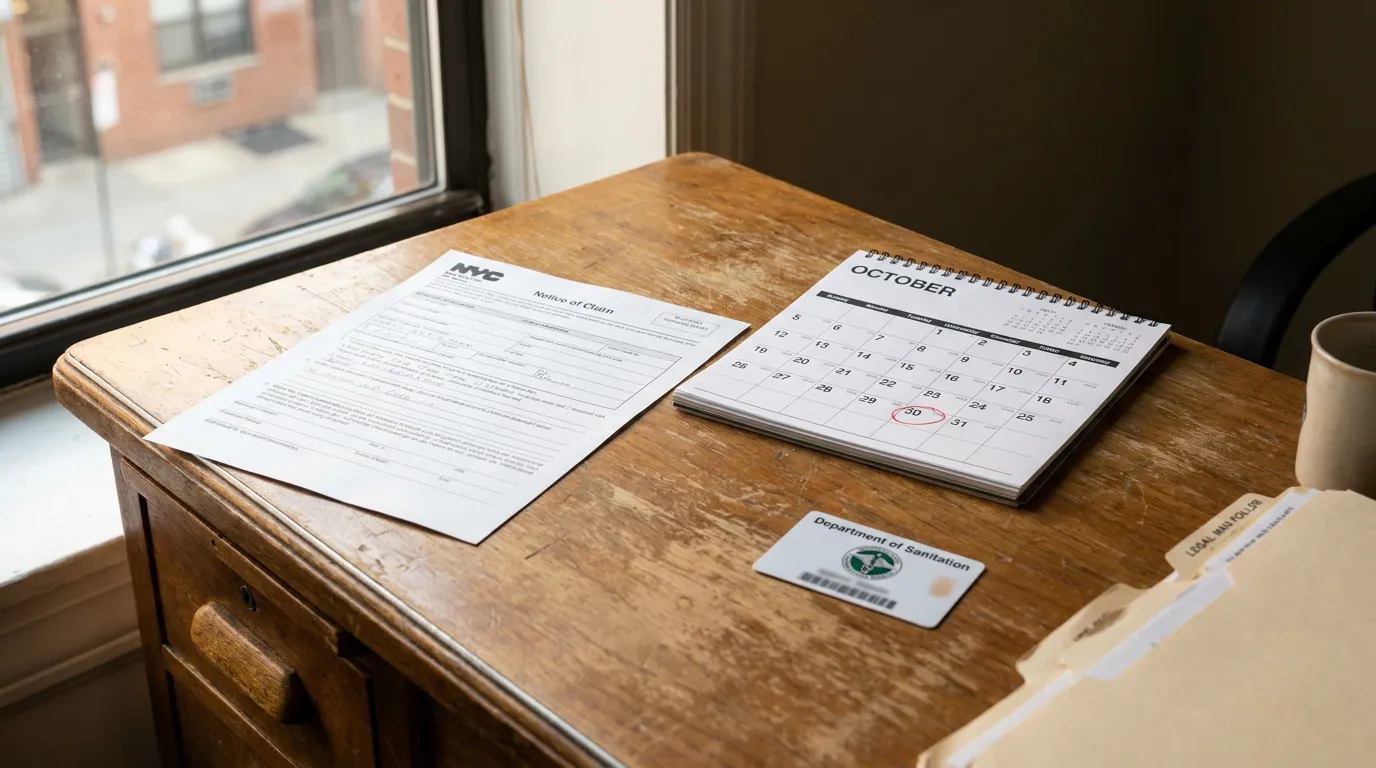
How the DSNY Lawsuit Deadline Actually Works
A DSNY lawsuit differs from a simple personal injury case because you are suing a municipal agency. The New York City Department of Sanitation is an arm of the City, meaning claims fall under stricter notice and timing rules than ordinary negligence deadlines between private parties.
The framework comes from Article 4 of the General Municipal Law, governing negligence and malfeasance claims against municipal corporations. Under General Municipal Law § 50-i, no action for personal injury or property damage may be maintained against a city unless a notice of claim was served under § 50-e, at least thirty days have elapsed since service, and the action is commenced within 1 year and 90 days after the event. Wrongful-death actions, however, carry a two-year statute of limitations under EPTL § 5-4.1; they are still subject to the procedural prerequisites of GML § 50-i, including the Notice of Claim requirement.
Think of this as a two-step structure. Step one is the Notice of Claim, due within 90 days of the incident. Step two is the lawsuit itself, which must be commenced within the broader 1-year-and-90-day window for personal injury and property damage claims (two years for wrongful-death claims). Both steps carry independent deadlines, and satisfying one does not excuse failure to meet the other.
| Step | What It Is | General Deadline |
|---|---|---|
| Notice of Claim | Sworn written notice served on the City | Within 90 days of the incident |
| Waiting period | Time the City has to investigate before suit | At least 30 days after service |
| Lawsuit commencement | Filing the action in court | Within 1 year and 90 days of the incident (two years for wrongful-death claims) |
💡 Pro Tip: Calendar your 90-day Notice of Claim date the same week you are injured. That short window closes long before the lawsuit deadline and is the deadline most often missed by injured workers focused on recovery.
The Notice of Claim: Your Mandatory First Step
The Notice of Claim is a condition precedent, meaning your right to sue does not exist until you properly serve it. Under General Municipal Law §§ 50-e and 50-i, no action may be maintained against a municipal entity for personal injury unless a notice of claim has been served. Skipping this step can bar you from court entirely, regardless of injury severity.
The content matters as much as the timing. General Municipal Law § 50-e(2) requires the notice be in writing, sworn to by or on behalf of the claimant, and set forth the name and address of each claimant, the nature of the claim, the time when, place where, and manner in which the claim arose, plus items of damage or injuries claimed. A vague or incomplete notice can create City defenses later. Review the full statutory text of the GML 50-e notice rules directly through the New York State Senate.
Service must follow the prescribed method. Under § 50-e(3)(a), notice may be delivered personally, by registered or certified mail, or in cities over one million population like New York City, by electronic means in a form and manner the city prescribes.
Missing this 90-day window is one of the most damaging mistakes. A court may grant permission to file a late notice of claim under certain circumstances, but that relief is discretionary, interpreted narrowly, and generally must be requested before the 1-year-and-90-day statute of limitations expires for personal injury and property damage claims (or before the two-year limit under EPTL § 5-4.1 expires for wrongful-death claims). If you missed the deadline, do not assume your case is over, but act quickly and read more about what to do if you missed the 90-day notice deadline in a Bronx sanitation injury matter.
💡 Pro Tip: Preserve your Line of Duty Injury (LODI) and Unusual Occurrence reports immediately. These internal DSNY records document the time, place, and manner of your injury, exactly what the Notice of Claim must contain.
Waiting Periods and the Final Filing Window
After filing the Notice of Claim, you cannot immediately file suit. The City receives a statutory waiting period to investigate. Under General Municipal Law § 50-i, a claimant generally must wait at least 30 days after service and comply with any demand for a § 50-h hearing before commencing the action.
The governing statutes reinforce both the waiting period and the outer deadline. General Municipal Law § 50-i provides that omitting to serve notice or commence action within applicable periods operates as a bar to the claim, while also requiring at least 30 days elapse after service of notice. The law imposes both a floor and a ceiling on when you may sue.
These procedural steps are separate from any administrative or pension process. Applying for a 3/4 accidental disability pension or filing internal DSNY paperwork does not satisfy the Notice of Claim requirement or stop the lawsuit deadline from running. Keeping the civil lawsuit timeline distinct from workplace administrative filings avoids a false sense of security. For a general overview of civil filing deadlines, the New York courts publish a statute of limitations timetable illustrating how varied these periods can be.
Key deadlines for a Bronx sanitation injury claim include:
- The 90-day Notice of Claim deadline under GML § 50-e
- The statutory waiting period before filing suit
- Compliance with any § 50-h examination or hearing demand
- The 1-year-and-90-day statute of limitations to commence the lawsuit (two years for wrongful-death claims)
💡 Pro Tip: If the City schedules a § 50-h hearing, take it seriously. Your sworn testimony shapes your entire case, and unexcused failure to appear may delay or jeopardize your right to proceed.
Why Strict Compliance Protects Your Recovery
New York treats these deadlines as strict rather than flexible. Missing the notice deadline or lawsuit commencement deadline is not merely technical; under governing statutes it can operate as an absolute bar to recovery. Because outcomes depend heavily on specific facts, timing, and documentation, early legal review often preserves a claim.
Sanitation workers face severe injury risks from being struck by vehicles, defective equipment, slips and trips on routes or in garages, and hazardous material exposure. Our overview for a DSNY injury attorney New York workers rely on explains the practice area in detail.
Proving the case requires more than meeting deadlines. A successful plaintiff must establish duty, negligence, causation, and compensable damages such as medical treatment, lost wages including chart, truck, and overtime pay, pension impacts, and pain and suffering. Meeting the statute of limitations DSNY imposes simply keeps the courthouse door open for litigation.
💡 Pro Tip: Keep a running file of medical records, pay stubs, and out-of-pocket expenses from day one. Documenting lost overtime and wage differentials early makes proving damages far easier later.
Frequently Asked Questions
1. What is the deadline to file a DSNY lawsuit in The Bronx?
Under General Municipal Law § 50-i, most tort actions for personal injury and property damage against the City must be commenced within 1 year and 90 days of the incident, after a timely Notice of Claim; wrongful-death actions against the City have a two-year limitation under EPTL § 5-4.1, and both types of claims are subject to the procedural prerequisites of GML § 50-i.
2. Is the Notice of Claim really required before I can sue?
Yes. General Municipal Law §§ 50-e and 50-i make a properly served notice of claim a condition precedent to suit, generally due within 90 days of injury.
3. Can I still file if I missed the 90-day notice deadline?
Possibly. Courts may allow a late notice under certain circumstances, but relief is discretionary, interpreted narrowly, and the request generally must be made before the statute of limitations expires, so seek guidance promptly.
4. Does filing for a disability pension protect my lawsuit deadline?
No. Pension and internal LODI filings are separate from the civil claim and do not satisfy the Notice of Claim requirement or stop the statute of limitations from running.
5. How long do I have to wait after filing the Notice of Claim?
You generally must wait at least 30 days after service and comply with any § 50-h hearing demand before commencing your lawsuit.
Protecting Your Rights Before the Clock Runs Out
The deadlines governing a Bronx sanitation injury claim are unforgiving but manageable when you act early. The 90-day Notice of Claim, the statutory waiting period, and the 1-year-and-90-day (or two-year under EPTL § 5-4.1 for wrongful-death) lawsuit deadline each serve a distinct function, and all three must be respected to preserve your right to recover. Because outcomes turn on precise facts and documentation, understanding your specific timeline is essential.
If you are a sanitation worker or person injured by DSNY operations, the sooner you understand your deadlines, the stronger your position. To discuss your sanitation worker legal deadline in The Bronx, reach out to The Law Offices of Dennis P. Ryan, call our office at 212.441.4352, or send us your details through our secure case review request so your claim can be evaluated well before the clock runs out.