
When Missing Records Can Change the Outcome of Your DSNY Injury Case
Key Takeaways: Spoliation of evidence in a Bronx sanitation worker injury claim generally occurs when a party with a duty to preserve relevant proof loses, destroys, alters, or fails to produce it, including truck maintenance logs, Unusual Occurrence and LODI reports, dashcam or depot footage, and the equipment itself. That duty generally attaches once litigation is reasonably anticipated, often coinciding with service of a Notice of Claim, typically due within 90 days under General Municipal Law § 50-e. New York’s disclosure rules under CPLR § 3101(g) and (i) specifically reach internal accident reports and video, making those records discoverable, subject to privileges and litigation-prepared-material protections. When a municipal defendant won’t produce them, a motion to compel under CPLR § 3124 generally comes first, with stronger remedies under CPLR § 3126 following, potentially adverse inference instructions, preclusion, resolved issues, struck pleadings, or monetary sanctions. Courts generally apply these remedies proportionally, reserving the harshest outcomes for willful conduct, while negligent loss more often draws an adverse inference where prejudice is shown. Because video and other proof can vanish within days, early preservation demands may matter as much as filing deadlines, which for municipal claims are usually shorter than the three-year period under CPLR § 214(5).
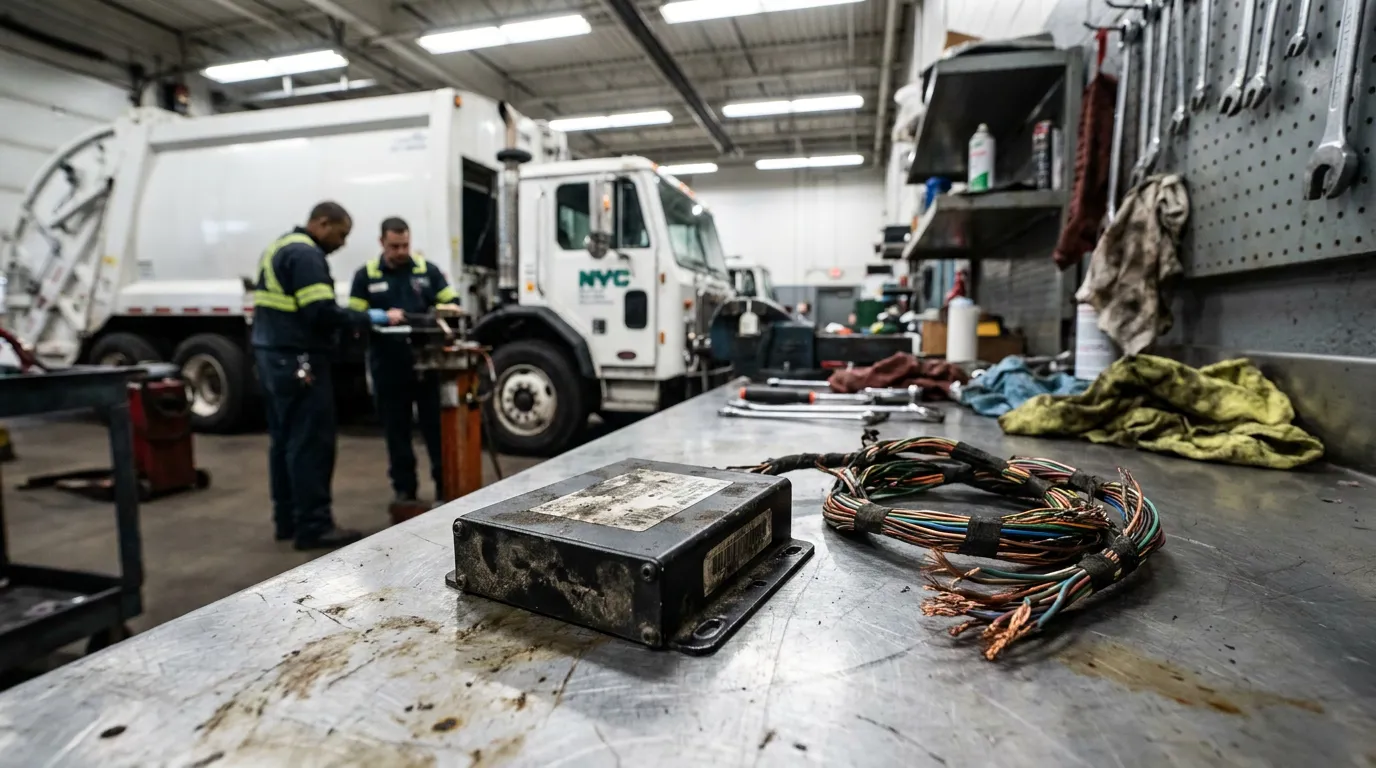
Spoliation generally occurs when a party with a duty to preserve relevant proof loses, destroys, alters, or fails to produce it. In a Bronx sanitation worker injury claim, that proof often includes truck maintenance logs, hopper and lift inspection records, Unusual Occurrence reports, Line of Duty Injury paperwork, dashcam or depot surveillance footage, and the damaged equipment itself. When those items disappear, New York courts may have tools to level the playing field.
If you were hurt on a route, in a garage, or while operating DSNY equipment in the Bronx, do not wait for records to go missing. The team at The Law Offices of Dennis P. Ryan can send preservation demands early, pursue the Notice of Claim process where required, and push for documents that support your case. Call 212.441.4352 or reach out to our team today to discuss what evidence still exists.
How New York Courts Define Spoliation of Evidence
Spoliation is generally treated as a procedural doctrine, not a standalone injury claim. Legal scholarship describes spoliation broadly as the destruction or significant alteration of evidence, or failure to preserve property for another party’s use in pending or reasonably foreseeable litigation, along with the remedies courts have developed in response. Remedies in your case will be governed by New York authority, applied through courts’ inherent power and CPLR § 3126.
The duty to preserve generally attaches once litigation is reasonably anticipated, not only after a lawsuit is filed. For a municipal injury claim, that moment often arrives no later than service of a Notice of Claim, since service puts the agency on notice that a dispute exists and specific records may be relevant, though the duty can arise earlier if the agency should have anticipated litigation.
Not every lost document supports a sanction. Courts generally examine whether the party had an obligation to preserve the item, the culpable state of mind involved, whether destruction was negligent, grossly negligent, or intentional, and whether the missing evidence was relevant enough that its loss prejudiced the other side. Where the loss is negligent, the party seeking sanctions ordinarily must show relevance and prejudice; relevance may be presumed for intentional or grossly negligent destruction. Routine, good-faith retention practices carried out before any duty attached are generally treated differently than deletion after notice.
Why a Spoliation of Evidence NYC Injury Claim Turns on the Notice of Claim
The Notice of Claim is generally both a condition precedent to suit and a practical evidence preservation trigger. Because DSNY is a municipal agency, an injured person generally cannot maintain a negligence action against the City unless a notice of claim was served in compliance with General Municipal Law §§ 50-e and 50-i and related provisions.
That deadline is short, generally 90 days from accrual under General Municipal Law § 50-e. Personal injury claims against the City, including those involving collection trucks, are generally presented to the NYC Comptroller’s office, which is ordinarily allowed time to adjust the claim before a lawsuit may be commenced. Courts may extend the time to serve a late notice upon application, generally within the statute of limitations period, but such applications are discretionary and should never be assumed.
The administrative claims process is generally separate from a civil lawsuit. Filing with the Comptroller generally does not commence the civil case or extend the statute of limitations, and a Line of Duty Injury designation through DSNY is typically a separate employment and benefits matter with its own procedures. Each track generally has independent deadlines, and complying with one does not automatically preserve the others.
💡 Pro Tip: Ask for copies of your own LODI and Unusual Occurrence reports in writing and keep the dated request. This creates a paper trail showing what you sought and when, which can matter later if the agency claims the records cannot be located.
Which Records Matter Most in a Bronx Sanitation Worker Injury Claim
New York’s disclosure rules specifically reach the categories of proof sanitation workers need. Under CPLR § 3101(g), there must generally be full disclosure of any written accident report prepared in the regular course of business, subject to an exception for reports prepared by police or peace officers for criminal investigation. That’s why internal DSNY accident and incident reports prepared in the regular course of business are generally discoverable, although reports prepared solely for litigation may still be protected.
Video evidence is covered by an even more explicit rule. CPLR § 3101(i) addresses films, photographs, video tapes, or audio tapes and requires full disclosure of all portions of such material, including out-takes, not just portions a party intends to use. CPLR § 3101(h) is a separate provision that requires a party who has responded to a disclosure request to amend or supplement it when the response was incorrect, incomplete, or has become materially misleading. You can review the full text of New York’s scope of disclosure statute for the complete framework, including protections for privileged material and material prepared in anticipation of litigation.
| Evidence Type | Why It Matters | Preservation Risk |
|---|---|---|
| Truck maintenance and repair logs | Show notice of defective hoppers, brakes, or lifts | Overwritten in fleet systems |
| Unusual Occurrence and LODI reports | Contemporaneous account of the incident | Filed internally, not automatically shared |
| Onboard camera and depot footage | Captures mechanism of injury | Often recycled within days or weeks |
| Route sheets and supervisor logs | Establish assignment, timing, and conditions | Archived or discarded |
| The equipment itself | Supports defect and product liability theories | Repaired, scrapped, or returned to service |
Video is often the most fragile category. Many camera systems overwrite footage on a short cycle, so a preservation letter sent weeks after the incident may arrive too late. Our guide on how to document evidence after a truck accident walks through practical steps injured workers can take in the first days after a DSNY injury.
What Happens When the City Will Not Produce Documents
Sanctions are rarely the first step. When a party fails to respond to discovery demands seeking maintenance records, incident reports, or footage, CPLR § 3124 allows the party seeking disclosure to move to compel compliance or a response. That motion may lead to a court order, creating a clear benchmark for measuring noncompliance.
Only after that point do the stronger remedies typically come into play. CPLR § 3126 provides that if a party refuses to obey a disclosure order or willfully fails to disclose information the court finds ought to have been disclosed, the court may make such orders as are just, including deeming issues resolved in favor of the party seeking disclosure, ordering preclusion, striking pleadings, staying proceedings, dismissing the action, or entering default judgment against the disobedient party. Courts may also impose sanctions for spoliation under their inherent authority even absent a violated order.
Available remedies for destroyed evidence generally fall along a spectrum:
- An adverse inference instruction permitting the jury to infer the missing evidence would have been unfavorable to the party that lost it
- Preclusion barring the offending party from offering testimony or arguments about the missing item
- An order deeming specific disputed issues resolved in the injured worker’s favor
- Striking pleadings or defenses in cases involving willful conduct or where the loss leaves the other side unable to prove its claim
- Monetary civil sanctions and costs associated with the motion practice
Courts generally apply these remedies proportionally. The statutory penalties for refusal to disclose give judges wide discretion, with the most severe outcomes generally reserved for willful or contumacious conduct, or losses that deprive a party of the ability to prove its case. Negligent loss more commonly results in an adverse inference or preclusion, and outcomes depend heavily on the facts and degree of prejudice shown.
How Filing Deadlines Shape Evidence Preservation Strategy
The Three-Year Civil Deadline
New York generally requires personal injury actions to be commenced within three years of accrual under CPLR § 214(5), except as provided in CPLR §§ 214-b, 214-c, 214-i, and 215. That period is the general rule for private defendants; shorter periods apply to many municipal claims. Three years can feel like ample time, but records rarely survive that long without an affirmative demand.
The Shorter Municipal Timeline
The three-year period generally does not govern a claim against a City agency. In addition to the 90-day Notice of Claim requirement, tort actions against the City generally must be commenced within one year and 90 days after accrual under General Municipal Law § 50-i, and these shorter deadlines can control whether the case may proceed at all. Tolling and discovery exceptions exist in limited circumstances, including for infancy and other disabilities, but courts generally interpret them narrowly and no injured worker should assume one applies.
Why Waiting Creates Practical Problems
Even when a deadline has not expired, delay can erode proof. Witnesses transfer or retire, footage cycles out, and equipment is repaired or removed from service. A firm known for handling DSNY injury and sanitation worker lawsuit matters can move quickly to lock down what still exists.
Frequently Asked Questions
1. Does spoliation automatically mean I win my case?
No. A spoliation finding may result in an adverse inference, preclusion, or other civil sanctions, but you generally must still prove duty, breach, causation, and damages. The remedy generally addresses the evidentiary imbalance, not liability itself.
2. Can I bring a separate lawsuit for destroyed evidence?
New York courts have generally declined to recognize an independent tort for spoliation, whether by a party or a third party, and remedies typically come through sanctions within the existing action. Whether any separate claim exists depends heavily on the facts and the party responsible.
3. What if the missing evidence was destroyed before I hired an attorney?
That situation is common and does not necessarily end the inquiry. Courts may consider when the duty to preserve attached, whether the agency should have anticipated litigation, and whether the loss caused meaningful prejudice.
4. Does my LODI status affect a municipal injury claim?
Line of Duty Injury benefits and pension matters generally proceed through separate administrative channels and are typically not a substitute for a civil claim. Because workers’ compensation and related benefit schemes are often the exclusive remedy against an employer, civil negligence claims by a City employee are usually directed at third parties such as other motorists, contractors, or equipment manufacturers, depending on who caused the injury.
5. How quickly should I request preservation of footage?
As soon as possible. Many surveillance and onboard systems overwrite within a short retention window, so a written preservation demand sent within days generally offers the best chance of recovery.
Protecting the Proof Behind Your Claim
Spoliation of evidence in a Bronx personal injury matter is ultimately a question of timing. The duty to preserve generally attaches early, the Notice of Claim window is short, and the records that may prove how a sanitation worker was hurt are often the first things to disappear. New York spoliation law gives courts meaningful authority to respond through adverse inferences, preclusion, and the sanctions available under CPLR § 3126, but those tools generally work best when someone identifies and demands the evidence before it is gone. Every case turns on its own facts, and no outcome can be predicted in advance.
If you are pursuing a spoliation of evidence NYC injury claim after a DSNY incident, early action may give you a stronger position. Speak with The Law Offices of Dennis P. Ryan about preservation demands, Notice of Claim filing, and discovery strategy. Call 212.441.4352 or schedule a consultation now to protect the evidence your claim depends on.
Disclaimer: This content is for informational purposes only and is not legal advice. Every case is unique, and results may vary. Consult an attorney about your specific circumstances.